“I feel that coming to Okinawa is not coming to Okinawa, but to return to Japan, returning to Tokyo is not returning to Tokyo, but to the United States.
——Shomei Tomatsu
Shomei Tomatsu conveyed these psychological traumas of nations and individuals through photography, deeply felt the major changes brought about by a series of events such as the US military stationed in Japan and its legacy U.S. military bases, and spent more than 20 years exploring this with a camera For Shomei Tomatsu, the use of photography to restore these experiences is far more convincing than language.
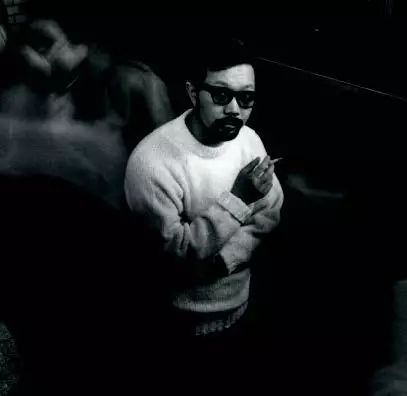
Shomei Tomatsu was born in Nagoya, Aichi, Japan, and entered the Nagoya School of Engineering and Science at the age of 12 with a major in electronics (he graduated in 1946). During the war, students’ class hours were not fixed. In 1944, he worked as an apprentice in a steel mill to manufacture apprentices and manufacture aircraft parts. According to Shomei Tomatsu, he only went to the shelter once during the air strike, and later chose to stay in his room and watch the fire in the distance through the mirror. After the war, he began stealing vegetables from the farm in exchange for his mother’s kimono. Because of the influence of the militaristic spirit, he had a generation gap with his parents since he was a child. In addition, his parents refused to give him food in the winter of 1945-1946, and they could only survive by stealing.
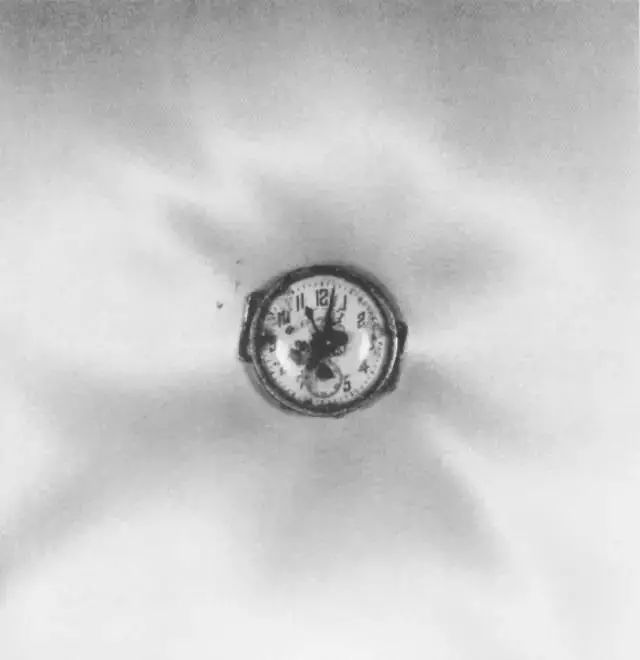
In 1961, the Japan Anti-Atomic Bomb and Hydrogen Bomb Committee published the “Hiroshima-Nagasaki Record of 1961”, which included a series of photos related to Nagasaki by Shomei Tomatsu. Shomei Tomatsu received this shooting project in 1960, and continued to follow the survivors of the Nagasaki Atomic Bomb after the book was published, showing their tragic body deformity caused by radiation. In 1966, Shomei Tomatsu published its own collection of atomic bomb photography series “Nagasaki at 11:02”, which symbolizes the damage caused by the atomic bomb with a series of things such as stopped watches.
John Sakowski, the godfather of contemporary photography in the United States, commented:
“Shomei Tomatsu has established the standards for young Japanese photographers to measure their existence through the concepts, styles, and methodologies of his works … In his photography, the nominal subject becomes more mundane and sometimes even worthless, The photos themselves have turned into sharper and richer records of their intuitive responses to their life experiences. “
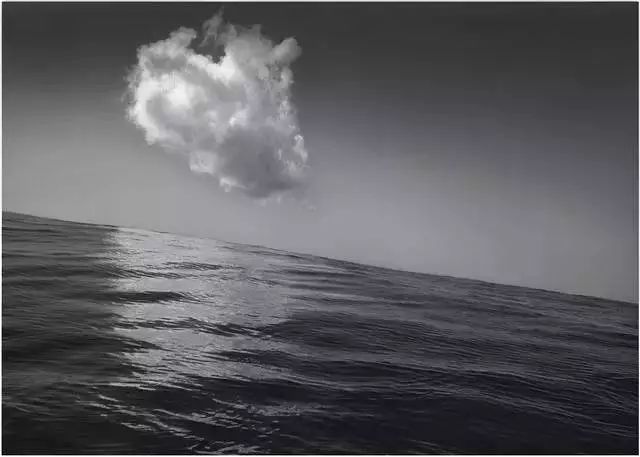
Even if the times are far away and the pain has been deliberately erased, the pulse of history is enough to run through one’s life. The emotion and memory of history made Shomei Tomatsu turn grief into a force. For example, in this picture titled “Untitled”, a cloud floats over the ocean like a balloon. This is one of a series of photographs “Pencil of the Sun” taken by Shomei Tomatsu in 1971. The solitary cloud casts a small shadow on the calm sea above the empty sky. Everything seemed calm, and at the same time danger was hidden beneath the sea.
 OUTLET IN NEW